The Conversation
27 Jul 2025, 08:54 GMT+10
Share article
Print article
Would you eat food that was printed by a machine? 3D printed food is built up by equipment (a 3D food printer), layer after layer, using edible pastes, dough and food slurries in three-dimensional forms. These machines use digital models to produce precise, often personalised food items. Most 3D printed foods are made from nutrient-dense sources (plant and animal), which means they can offer health benefits.
The global market for 3D printed food is growing. It's been estimated as worth US$437 million in 2024 and projected to reach US$7.1 billion in 2034. But the concept is still emerging in Africa.
Food science and technology researcher Oluwafemi Ayodeji Adebo and marketing academic Nicole Cunningham share what they learnt from a survey about South African consumers' feelings on the subject.
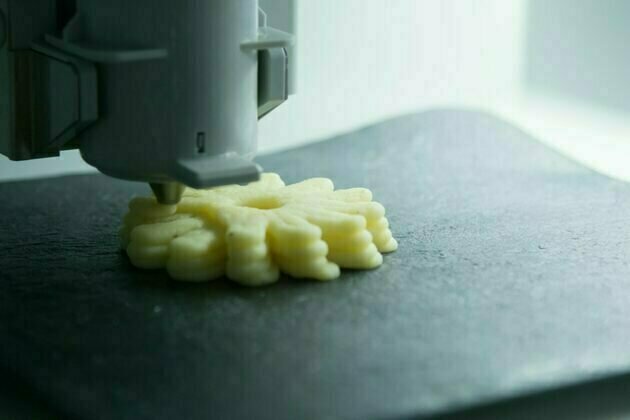
In 3D food printing, edible food materials are formulated into printable materials (food ink). These inks can be made from pureed vegetables, doughs, or nutrient-rich mixes. The food ink is loaded into a 3D printer and extruded in layers until the selected shape is complete.
After printing, some products are ready to eat, while others need further processing such as baking or freeze-drying. The most common method is extrusion-based printing, valued for its simplicity and versatility.
The technique enables the customisation of food. Meals can be highly personalised in texture, appearance and nutritional content.
It can also transform food waste into food products. For example it can turn imperfect broccoli and carrots into healthy snacks and make noodles from potato peels.
It's also useful in texture-modified diets for people with swallowing difficulties (dysphagia), especially the elderly. The products available for these patients tend to be bland and unappealing meals such as mashed potato, pumpkin and soft porridge. 3D food printing can produce nutritionally dense meals that are easier to eat and more appetising.
Read more: How 3D food printers could improve mealtimes for people with swallowing disorders
Food ink can combine various sources with different nutrients to boost the health benefits. Not having to process the product with heat can also result in higher nutritional content.
Virtually any edible material could be transformed into food inks, although some might require additives to make them printable. The abundance of nutrient-dense and health-promoting food crops in South Africa presents an excellent opportunity for 3D food printing to create novel food.
Sorghum, cowpea and quinoa have been used to make 3D printed biscuits, for example. They are more nutritious than wheat and don't contain gluten.
Read more: Africa's superfood heroes - from teff to insects - deserve more attention
Research at the Centre for Innovative Food Research at the University of Johannesburg has already demonstrated the feasibility of obtaining 3D printed products from different sources (for example whole-grain sourdough and malt biscuits, biscuits from wholegrain and multigrain flours and nutritious and appetising meals for dysphagia patients).
Read more: 3D printing offers African countries an advantage in manufacturing
3D food printing is still in its infancy in South Africa, compared to developed countries such as China, Japan, the US and some European countries. The best-known companies that have adopted this technology include BluRhapsody, based in Italy, which makes 3D-printed pasta, and Open Meals based in Japan, which specialises in personalised sushi.
We carried out a study to understand South African consumers' attitudes toward 3D-printed foods. Although the technology is not yet in wide use, we found some consumers were fairly knowledgeable about these foods and the associated benefits. These findings lay the foundation for business opportunities to commercialise and market 3D printed products in the region.
The study surveyed South African consumers aged 18-65 who were familiar with the concept of 3D-printed food. We collected 355 responses, mostly females aged 24 to 44. They provided information and opinions on several aspects, including:
their awareness of 3D-printed food
their familiarity with 3D-printed food
their food neophobia (fear of new foods)
the convenience that 3D-printed food offers
their perspective on their health needs
the perceived benefits that 3D-printed food offers
attitudes towards 3D-printed food.
Positive attitudes were strongest among those who recognised the convenience and health-related benefits of this new technology. The potential to reduce waste, customise nutrition, and simplify meal preparation stood out as key motivators.
Interestingly, food familiarity didn't play a significant role in people's responses. This means they aren't necessarily clinging to traditional or childhood meals when forming attitudes about 3D-printed food.
In short, novelty alone isn't a deal-breaker, it's more about perceived safety, usefulness, and understanding the benefits.
The findings highlight the crucial role of consumer education and awareness in shaping attitudes toward 3D-printed food. While unfamiliarity with the technology can create some hesitation, the research shows that consumers are not necessarily resistant to innovation. They just need to understand it better and be educated about the benefits it offers.
If food manufacturers and marketers invest in increasing public knowledge and offering hands-on experiences such as tastings, demonstrations, or transparent production processes, then consumer attitudes could shift positively.
This approach has shown promise in other markets. For example, educational campaigns in Europe and the US around lab-grown meat and plant-based proteins have improved public perception over time.
Read more: Nigeria isn't big on 3D printing. Teaching students how to use it could change this
Marketers should talk about safety, health and sustainability, and demystify the technology through clear, engaging messaging. In countries where such strategies have been used, consumers have shown increased willingness to try novel food technologies. This is significant because of predicted growth in the industry.
If South African consumers see 3D-printed food more positively, this innovation could unlock opportunities to enhance food security, address malnutrition, and support personalised dietary solutions.
Get a daily dose of Sierra Leone Times news through our daily email, its complimentary and keeps you fully up to date with world and business news as well.
Publish news of your business, community or sports group, personnel appointments, major event and more by submitting a news release to Sierra Leone Times.
More InformationNEW YORK CITY, New York: As cannabis-infused drinks grow in popularity and take over retail shelf space once dominated by beer and...
NEW YORK CITY, New York: Goldman Sachs is hitting pause on plans for additional job cuts, following a stronger-than-expected rebound...
SEOUL, South Korea: With just days left before a 25 percent tariff deadline, South Korea's push to strike a trade deal with the United...
NEW DELHI/LONDON: India and the United Kingdom will sign a comprehensive free trade agreement on July 24 during Prime Minister Narendra...
NEW YORK, New York - U.S. stock markets made solid ground Friday, sending all the key indices out with weekly gains. The Standard and...
WASHINGTON, D.C.: This week, President Donald Trump unveiled a new trade framework with Japan, announcing a 15 percent tariff on goods...
GENEVA, Switzerland: Health authorities are facing a resurgence of the mosquito-borne chikungunya virus, with new outbreaks emerging...
Cape Town [South Africa], July 27(ANI): Union Minister of State for External Affairs and Textiles, Pabitra Margherita, on Saturday...
(250727) -- KAMPALA, July 27, 2025 (Xinhua) -- Players of Namibia react after the Asia/Africa play-off match between Namibia and United...
Share article Print article Would you eat food that was printed by a machine? 3D printed food is built up by equipment (a 3D food...
Abu Dhabi [UAE], July 27 (ANI/WAM): UAE President Sheikh Mohamed bin Zayed Al Nahyan has sent a message of congratulations to President...
Khartoum [Sudan], July 27 (ANI): A coalition led by the paramilitary Rapid Support Forces (RSF) in Sudan has declared the formation...